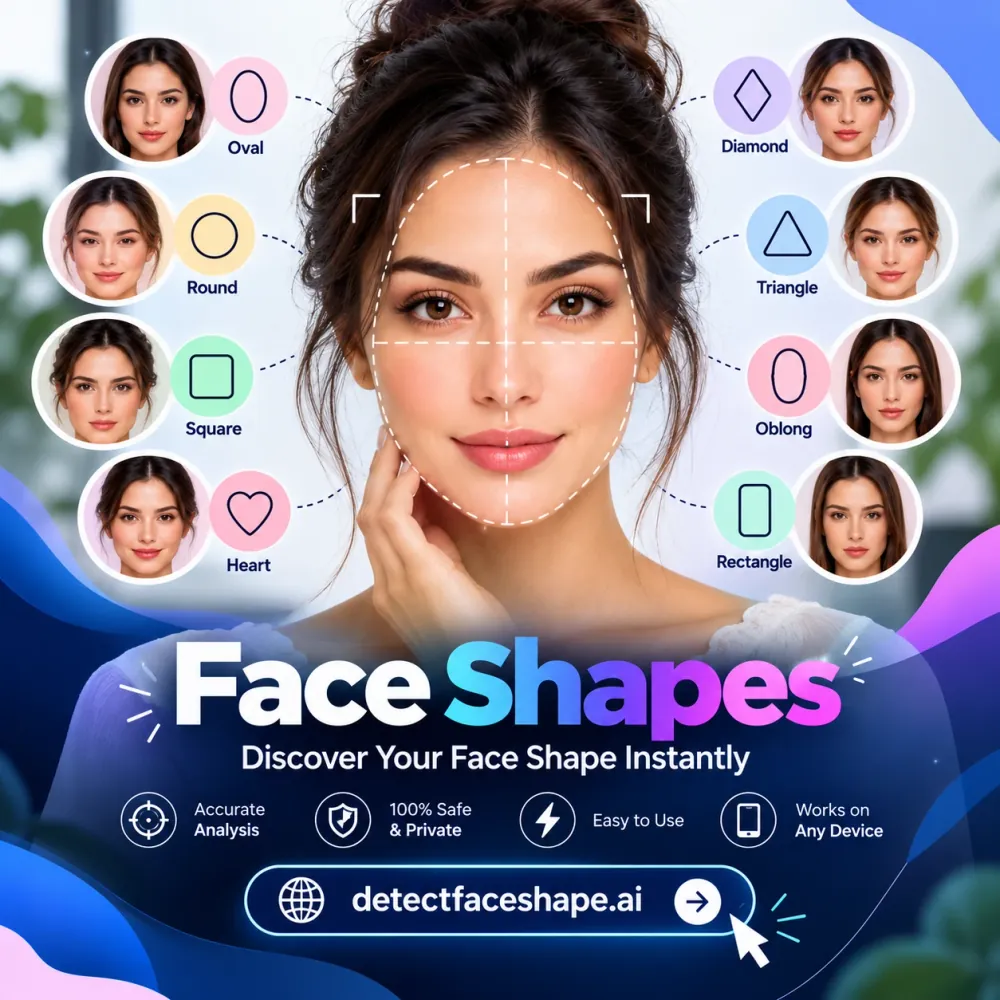
What Are Face Shapes?
A face shape is a simple way to describe your facial structure. Stylists, opticians and makeup artists use it as a shortcut. Instead of describing every curve, they compare a few measurements and match the overall outline to a familiar shape, such as an oval or a heart.
Your face shape comes mostly from your bone structure: the width of your skull at the temples, your cheekbones and your jaw. Weight, age and hairstyle change how your face looks day to day, but the underlying shape stays fairly stable through adult life. That is why it makes such a useful style guide.
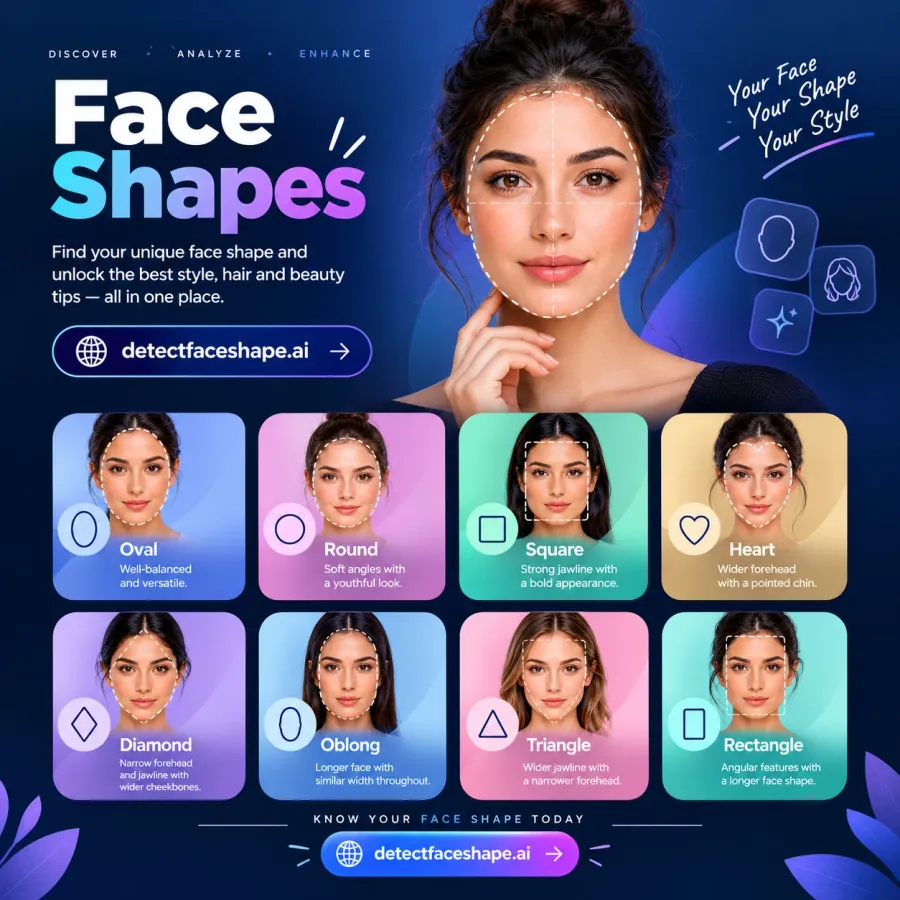
The 4 measurements that decide your face shape
- Forehead width. Measured across the temples. A wide forehead points toward heart; a narrow one toward diamond or triangle.
- Cheekbone width. The distance between the outer points of your cheekbones. On many faces, this is the widest line.
- Jaw width. The distance between your jaw corners, just below the ears. A wide, angular jaw suggests square, rectangle or triangle.
- Face length. From the middle of your hairline to the tip of your chin. Comparing it with your width splits short faces from long ones.
All 8 Types of Face Shapes
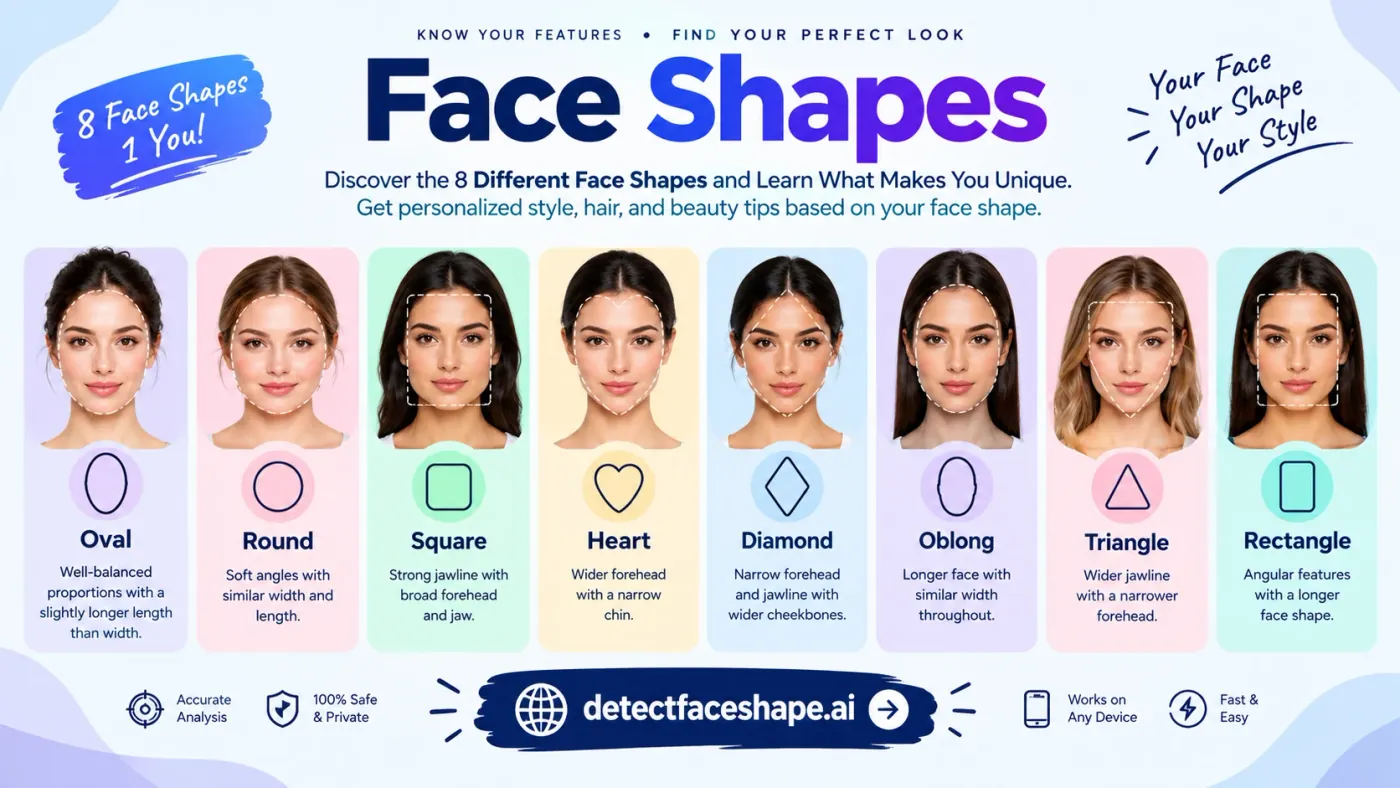
Here are the different face shapes, each with its own balance of length and width. Tap any shape for its full guide with hairstyles, glasses, beard styles and makeup tips.
01
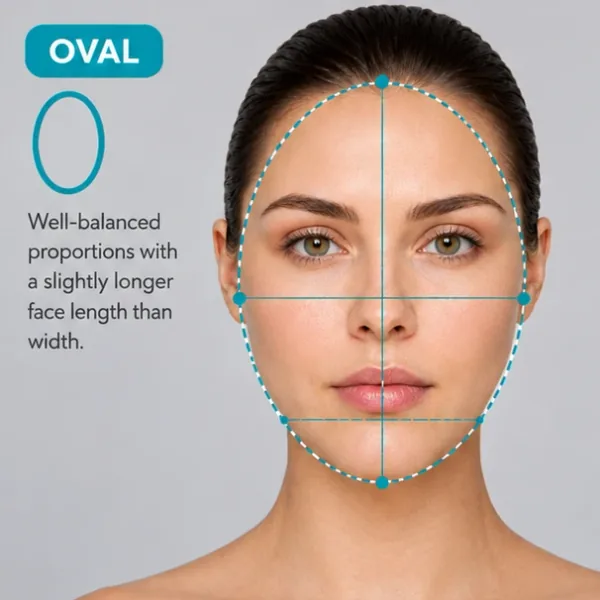
Oval Face Shape
Slightly longer than it is wide, with a forehead a little wider than the jaw and a softly rounded chin. Balanced and easy to style.
- Length vs width: About 1.5× longer than wide
- Widest point: Cheekbones
- Jawline: Soft and gently rounded
02
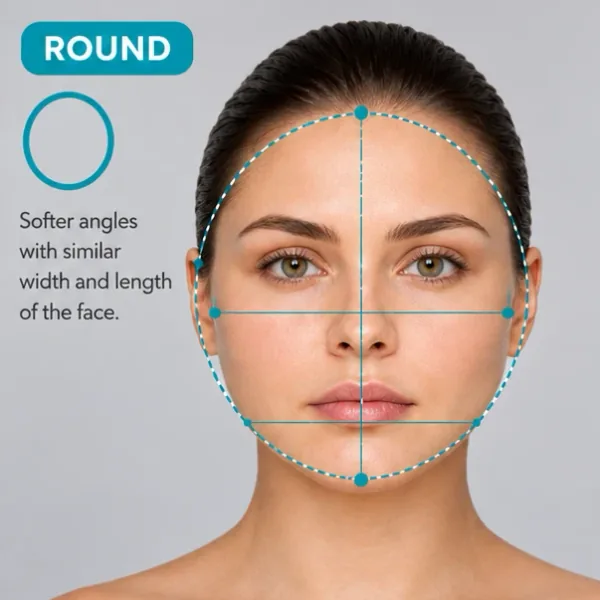
Round Face Shape
About as wide as it is long, with full cheeks and a soft, curved jaw that has no clear corners.
- Length vs width: Nearly equal
- Widest point: Cheeks
- Jawline: Soft, no visible angle
03
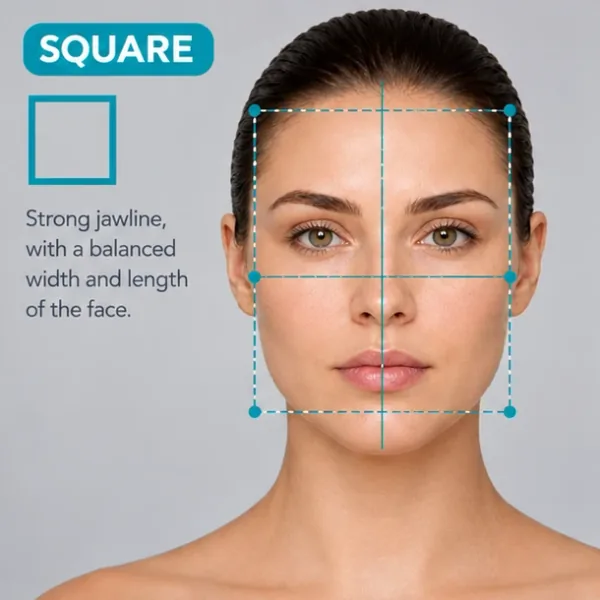
Square Face Shape
Forehead, cheekbones and jaw are close in width, with a strong, angular jaw and a broad, flat chin.
- Length vs width: Nearly equal
- Widest point: Even across forehead, cheeks, jaw
- Jawline: Broad with sharp corners
04
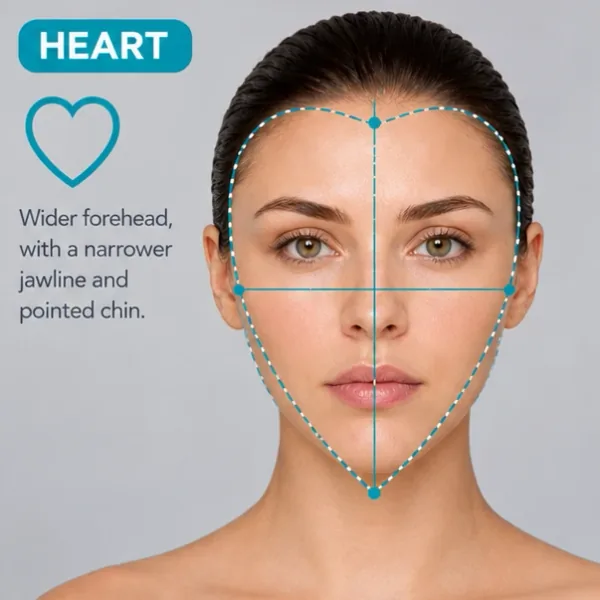
Heart Face Shape
Widest at the forehead, tapering to a narrow, often pointed chin. Many heart faces also have a widow’s peak.
- Length vs width: Slightly longer than wide
- Widest point: Forehead and temples
- Jawline: Narrow, tapering
05
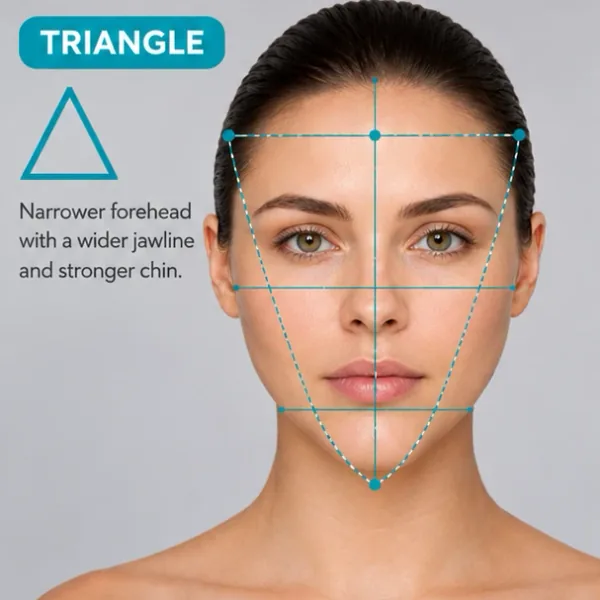
Triangle Face Shape
The reverse of a heart: the jaw is the widest part, and the forehead is noticeably narrower.
- Length vs width: Slightly longer than wide
- Widest point: Jawline
- Jawline: Broad and strong
06
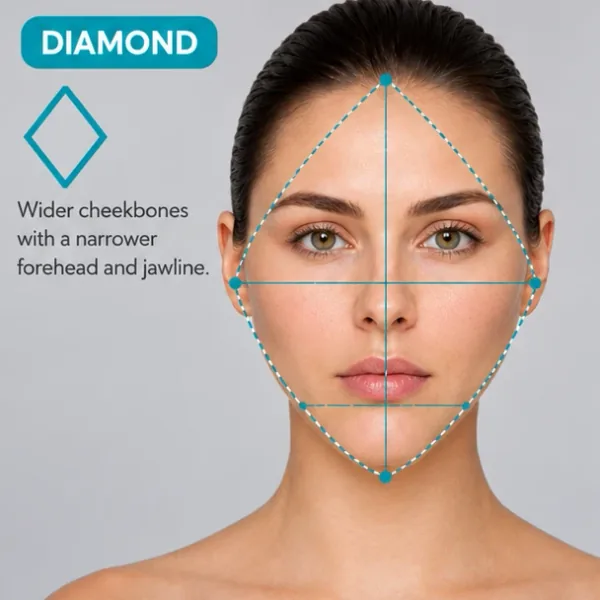
Diamond Face Shape
Wide, high cheekbones with a narrower forehead and jaw. One of the rarer and most sculpted face shapes.
- Length vs width: Longer than wide
- Widest point: Cheekbones, clearly
- Jawline: Narrow and angular
07
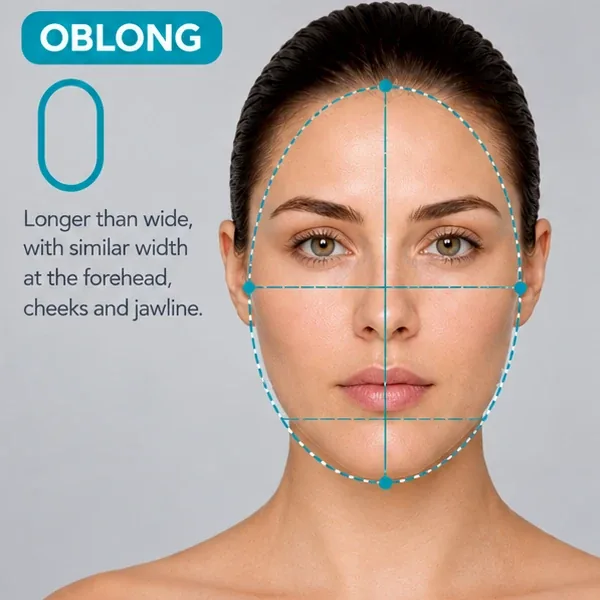
Oblong Face Shape
Clearly longer than it is wide, with fairly straight sides and a softly rounded jaw.
- Length vs width: Clearly longer, often 1.6× or more
- Widest point: Even from forehead to jaw
- Jawline: Rounded corners
08
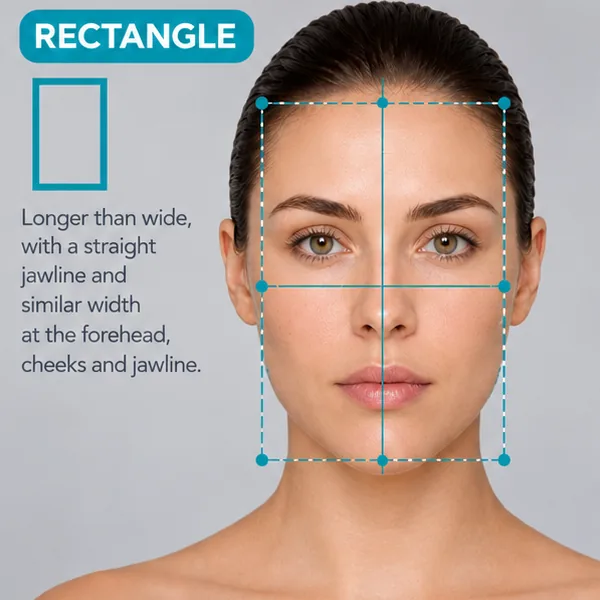
Rectangle Face Shape
Long like an oblong face, but with a straight, angular jawline and a broad chin.
- Length vs width: Clearly longer than wide
- Widest point: Even across the face
- Jawline: Straight and angular
Face Shape Chart: Compare Different Face Shapes
Seeing different face shapes next to each other is the quickest way to spot your own. The line-up shows all eight outlines to the same scale, and the bars below show which part of each face is usually the widest.
Oval
- Forehead
- Cheekbones
- Jaw
- Length
Round
- Forehead
- Cheekbones
- Jaw
- Length
Square
- Forehead
- Cheekbones
- Jaw
- Length
Heart
- Forehead
- Cheekbones
- Jaw
- Length
Triangle
- Forehead
- Cheekbones
- Jaw
- Length
Diamond
- Forehead
- Cheekbones
- Jaw
- Length
Oblong
- Forehead
- Cheekbones
- Jaw
- Length
Rectangle
- Forehead
- Cheekbones
- Jaw
- Length
Bars show typical proportions for each shape, not exact measurements. The highlighted bar marks the widest part of the face.
| Face shape | Length vs width | Widest point | Jawline | Chin / forehead |
|---|---|---|---|---|
| Oval | About 1.5× longer than wide | Cheekbones | Soft and gently rounded | Slightly narrower than forehead |
| Round | Nearly equal | Cheeks | Soft, no visible angle | Short and rounded |
| Square | Nearly equal | Even across forehead, cheeks, jaw | Broad with sharp corners | Wide and flat |
| Heart | Slightly longer than wide | Forehead and temples | Narrow, tapering | Small and often pointed |
| Triangle | Slightly longer than wide | Jawline | Broad and strong | Narrower than the jaw |
| Diamond | Longer than wide | Cheekbones, clearly | Narrow and angular | Narrow, often pointed |
| Oblong | Clearly longer, often 1.6× or more | Even from forehead to jaw | Rounded corners | Rounded, may be long |
| Rectangle | Clearly longer than wide | Even across the face | Straight and angular | Broad and squared |
The 3 Face Shape Families
If eight options feel like a lot, start here. Decide which family your face belongs to, then use the jawline and the widest point to narrow it down.
Short faces
Round Square
Length and width are almost equal. Round faces have a soft jaw, while square faces have clear, angular corners.
Long faces
Oval Oblong Rectangle
Length is clearly greater than width. Oval tapers gently, oblong has straight sides and a soft jaw, and rectangle adds a sharp jaw.
Tapered faces
Heart Diamond Triangle
One area stands out as widest: the forehead for heart, the cheekbones for diamond, and the jaw for triangle.
How to Find Your Face Shape
There are three reliable ways to find your face shape, from a ten-second photo check to a five-minute tape measure. For the most confident answer, try two methods and see whether they agree.
Method 1: Use an AI face shape detector
The fastest way to find your face shape is to let software do the measuring. Our AI face shape detector runs in your browser and checks your proportions far more consistently than a tape measure can.
Take or upload a selfie
Face the camera straight on, with your hair pulled back and soft, even light on your face.
Crop around your face
Frame your face from hairline to chin. The tool suggests a crop for you.
Let the AI measure
It maps 478 facial landmarks and compares your proportions with all eight face shapes.
Read your scores
You get your face shape, a confidence score and how close you are to every other shape.
Method 2: Measure your face with a tape
All you need is a soft measuring tape, a mirror and good light. Pull your hair back, keep your head level and write each number down.
Forehead
Measure across the widest part of your forehead, from temple to temple.
Cheekbones
Measure from the outer point of one cheekbone to the other, just below the outer corners of your eyes.
Jawline
Measure from one jaw corner to the other, just below the ears.
Face length
Measure from the center of your hairline straight down to the tip of your chin.
Compare the numbers
Find your largest width, then check how your length compares with it using the rules below.
How to read your measurements
- Length close to width? You are likely round (soft jaw) or square (angular jaw).
- Length clearly greater? Look at oval, oblong and rectangle.
- Forehead widest? Heart is your most likely match.
- Cheekbones widest, with a narrow forehead and jaw? That points to diamond.
- Jaw widest? That points to triangle.
Method 3: The mirror trace test
Not in the mood for numbers? This old stylist trick gives you a quick visual answer.
Stand at arm’s length
Face a mirror in good light, with your head level and your hair tied back.
Trace your outline
Using a washable marker, lipstick or a bar of soap, trace the edge of your reflection from hairline to chin. Keep one eye closed so the line does not shift.
Step back and compare
Look at the shape you drew and compare it with the face shape line-up above.
How to Tell What Face Shape You Have
Measuring gives you numbers, but you still need to read them. The easiest way to tell your face shape at a glance is to check three clues in order: your face length, your widest point and your jawline.
- 1
Length
Is your face about as long as it is wide, or clearly longer? Equal points to round or square. Longer points to oval, oblong or rectangle.
- 2
Widest point
Forehead means heart. Cheekbones mean oval, round or diamond. Jaw means triangle. Even widths mean square, oblong or rectangle.
- 3
Jaw and chin
Angular corners suggest square or rectangle. A soft curve suggests round, oval or oblong. A narrow, pointed chin suggests heart or diamond.
How to Know What Face Shape You Have When You Are Between Two
Many people sit between two face shapes, and that is completely normal. When your clues point in two directions, the single detail below usually settles it. If it still feels close, read both guides. The best styles often borrow from each.
Common Mistakes When Identifying Your Face Shape
Most wrong answers come from the photo or the pose, not the face. Avoid these and any method above becomes far more reliable.
- Leaving hair over your face. Bangs and loose hair hide your hairline and temples, which changes the outline completely.
- Taking a close-up selfie. Phone lenses held close stretch the center of the face and shrink the sides. Hold the camera at arm’s length.
- Tilting your head. Shooting from below widens the jaw; shooting from above enlarges the forehead. Keep the camera at eye level.
- Smiling widely. A big smile pushes the cheeks out and changes the jaw. Keep a relaxed, neutral expression.
- Confusing full cheeks with a round face. Face shape is about bone structure. Feel for your jaw corners and cheekbones rather than judging soft tissue.
- Copying a celebrity’s answer. Photos, angles and makeup vary. Measure your own face instead of matching someone else’s label.
What Is the Most Attractive Face Shape?
Short answer: there is no single most attractive face shape. The oval face is often called the “ideal” in beauty and styling guides, but that is because its balanced proportions are easy to style, not because other shapes are less attractive.
Research on facial attractiveness points somewhere else. Studies have repeatedly linked attractiveness with facial symmetry, with “averageness” (features close to the population average), and with signs of good health such as clear skin. Expression matters too: a natural smile changes how people see a face far more than its outline does. Beauty standards also shift between cultures and decades, so strong jaws, high cheekbones and soft, round faces have each had their moment.
Why Knowing Your Face Shape Helps
Haircuts
Choose cuts that add length, width or softness where your face needs it.
Glasses
Pick frames that contrast with your outline and match your widest point.
Beard styles
Shape facial hair to sharpen a soft jaw or balance a long face.
Makeup
Place contour, blush and highlight to suit your proportions.
Face Shape FAQs
How many face shapes are there?
Most stylists use seven to nine face shapes. We use eight: oval, round, square, heart, triangle, diamond, oblong and rectangle. Together they cover nearly every face.
What is the most common face shape?
Oval and round are among the most common results in face shape tests, but there is no reliable worldwide count. Many people are a blend of two shapes.
What is the rarest face shape?
Diamond and triangle are usually described as the least common face shapes. Many people who first think they are diamond or triangle turn out to be oval or square after measuring.
Can you have two face shapes?
Yes. It is very common to sit between two shapes, such as oval and oblong. Our AI detector shows a score for every shape so you can see how close you are to each.
Can your face shape change over time?
Your bone structure stays the same, but weight changes, ageing and muscle tone can soften or sharpen your outline. It is worth checking again every few years.
Do men and women have different face shapes?
Both use the same eight face shapes. Men’s faces often have a wider, more angular jaw, so square and rectangle results are common, but any shape can appear in anyone.
Find Your Face Shape, Then Style It With Confidence
All face shapes come down to the same four proportions: forehead, cheekbones, jaw and length. Once you know which of the eight types of face shapes you have, choosing a haircut, glasses or beard style becomes far less of a guessing game.
Start with a quick mirror check or a tape measure. Then confirm it with a photo, and open the guide for your shape for detailed, practical style advice.