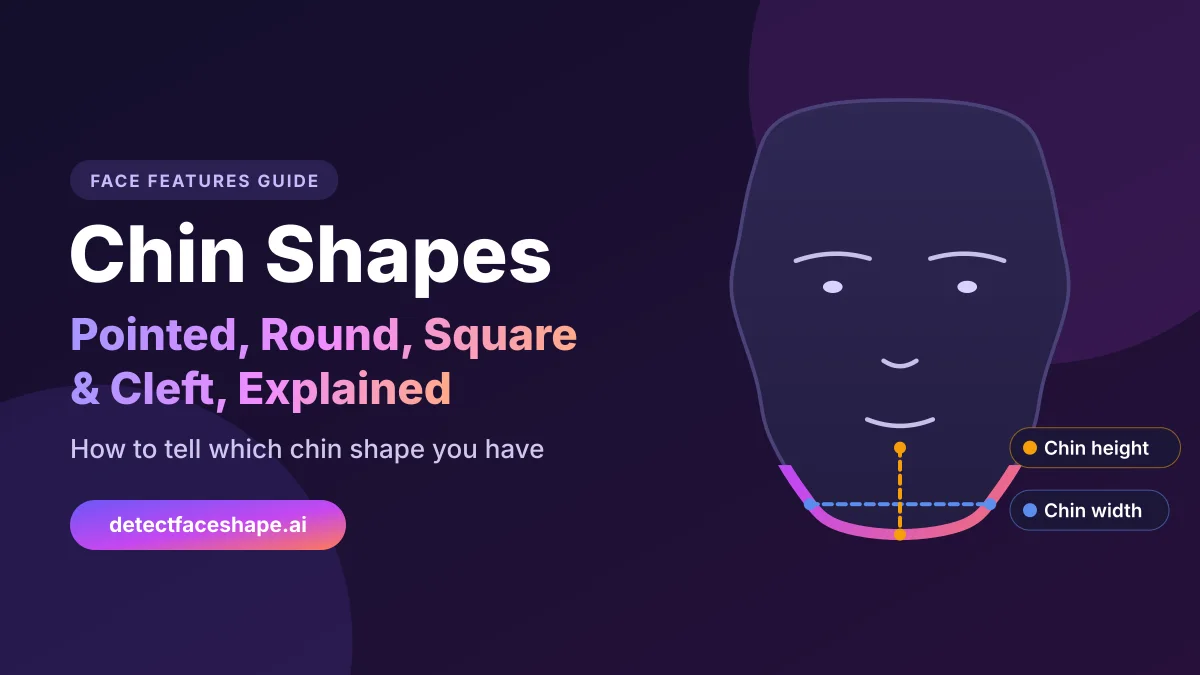
Your chin is the small part of your face below your lower lip, but it does a lot of work. It finishes your face outline, shapes your profile and decides how long or short your lower face looks. Knowing your chin shape helps you choose beards, haircuts, glasses and contour makeup that balance it. This guide explains the four main chin shapes, how chins look in profile, how to tell yours and the styles that suit each one.
What Is Your Chin?
The chin is the front of your lower jaw bone, the point where its left and right sides meet below the lower lip. Its look comes from three things:
- Width: how broad the bottom of your face is between the corners of your chin.
- Lower edge: whether the bottom is pointed, curved or flat.
- Projection: how far your chin sits forward or back when you look at your face from the side.
Your chin is closely linked to your jawline. The jawline runs from below your ears to the chin, while the chin is only its front end. If you want to read the whole lower face, our guide to jawline types covers the rest.
The 4 Main Chin Shapes
Look at your chin from the front: its width and the shape of its lower edge tell you which of these you have.
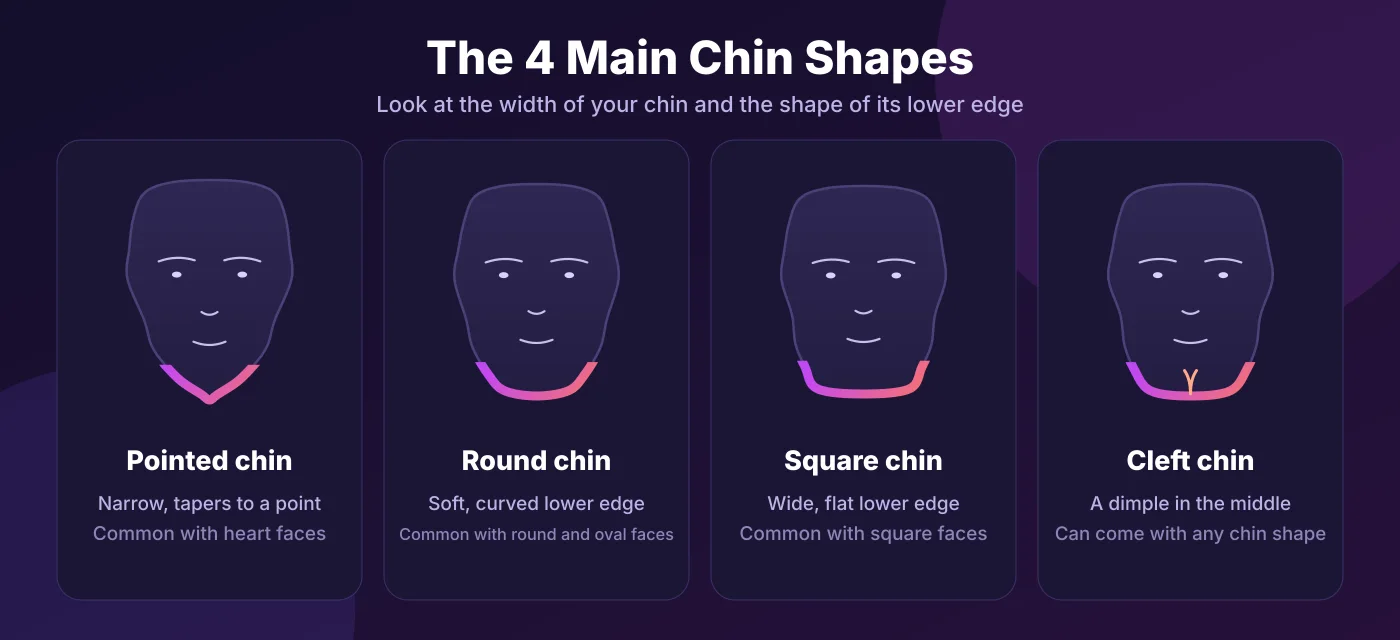
Pointed chin
A pointed chin is narrow and tapers to a point, often called a V-shaped or tapered chin. It makes the lower face look slim and delicate. Pointed chins are typical of heart face shapes and diamond faces, where the face narrows from the cheekbones down.
Round chin
A round chin has a soft, curved lower edge without corners. It looks gentle and youthful, and it is the most common chin on round and oval faces.
Square chin
A square chin is wide, with a flat lower edge and visible corners. It gives the lower face a strong, structured look and usually comes with a square or rectangle face and an angular jaw.
Cleft chin
A cleft chin has a dimple or vertical groove in the middle. It is not a separate outline: a cleft can appear on a square, round or pointed chin. It usually forms where the left and right halves of the jaw bone, or the chin muscle above it, join during development. Cleft chins tend to run in families, although the genetics are more complex than the simple “dominant trait” often taught in school.
Chin Shapes in Profile: Receding, Balanced and Prominent
From the side, chins are described by how far they project. A common guideline is to imagine a line straight down from your lower lip:
- Receding chin (also called a weak or retruded chin): the chin sits clearly behind the line, so the jaw and neck can blend together.
- Balanced chin: the chin sits close to the line, which most people read as harmonious.
- Prominent chin (a strong or protruding chin): the chin sits in front of the line and gives a bold profile.
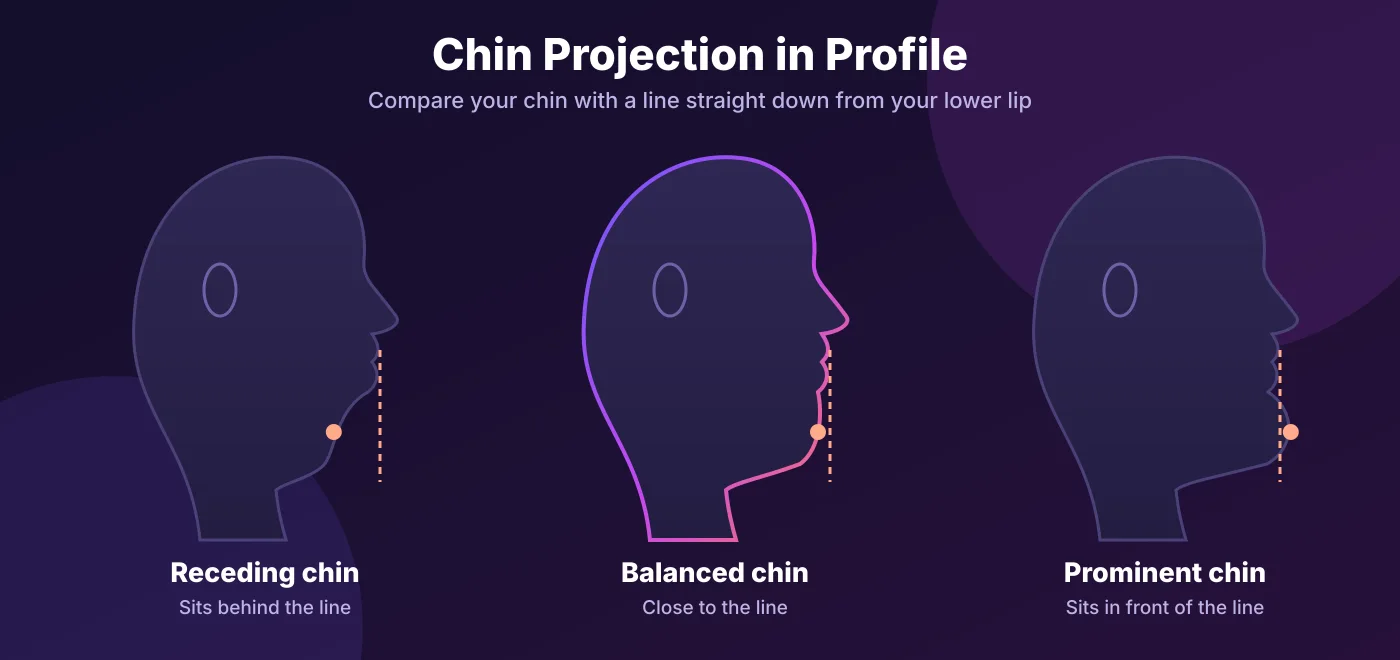
This lip line is a styling guideline, not a medical rule. A chin that looks receding can also come from the position of your teeth and jaws, so if you have concerns about your bite, a dentist or orthodontist is the right person to ask.
Other chin types
- Long or short chin: measured from the lower lip to the bottom of the chin. A long chin lengthens the face; a short chin can make it look rounder.
- Wide or narrow chin: compared with the width of your mouth.
- Double chin: a fold of soft tissue under the chin. It is not a chin shape, because it comes from fat and skin rather than bone, but it can hide the real chin outline.
How to Tell Your Chin Shape
Two photos and a minute are enough. Keep your head level, relax your mouth and pull any beard or hair away from your jaw if you can.
Take a front photo at eye level
Hold the camera straight in front of your face at arm’s length, with a neutral expression.
Compare your chin with your mouth
A chin about as wide as your mouth or wider is wide (often square). A chin clearly narrower than your mouth is narrow (often pointed).
Look at the lower edge
A point means pointed, a soft curve means round and a flat edge with corners means square. A dimple in the middle means cleft.
Take a side photo
Stand side-on to the camera with your chin level, not raised or tucked in.
Check the projection
Imagine a line straight down from your lower lip. Behind it is receding, close to it is balanced and in front of it is prominent.
Chin Shapes and Face Shapes
Your chin is one of the clearest clues to your face shape. These pairings are common:
| Face shape | Typical chin |
|---|---|
| Oval | Gently rounded, slightly narrower than the forehead |
| Round | Round and soft |
| Square | Square, wide and flat |
| Heart | Pointed and narrow |
| Triangle | Broad, often square |
| Diamond | Pointed or narrow |
| Oblong | Rounded, sometimes long |
| Rectangle | Square |
If you are not sure of your face shape yet, your chin is a good place to start, but the full answer also needs your forehead, cheekbones and face length.
Chin Differences in Men and Women
On average, men have broader, squarer chins that project a little more, while women’s chins are on average narrower and more rounded or pointed. That is why a strong, square chin is often seen as masculine and a small, tapered chin as feminine.
These are averages with plenty of overlap, and every shape is common in both men and women.
What Changes the Way Your Chin Looks?
- Genetics: your bone structure sets your chin’s width, shape and projection, and cleft chins often run in families.
- Body fat: fat under the chin softens its outline and can create a double chin; losing weight often makes the chin look more defined.
- Age: skin loses firmness over time, which can blur the line between the chin and the neck.
- Posture and camera angle: pushing your head forward or shooting photos from below can make the chin look smaller or doubled.
- Teeth and bite: how your upper and lower jaws meet affects how far your chin sits forward.
- Facial hair: a beard can change your chin’s visible shape completely.
Can You Change Your Chin Shape?
Your chin bone does not change in adulthood, but how your chin looks can:
- Styling: beards, haircuts, contour makeup and glasses can make a chin look longer, wider, softer or stronger.
- Lower body fat and good posture: both make the chin outline clearer.
- Medical options: fillers, chin implants and jaw surgery exist, and orthodontic treatment can change how the jaws meet. These are medical decisions; talk to a qualified professional about risks and results.
Chin exercises and “mewing” are popular online, but there is little scientific evidence that they reshape the chin or jaw bone in adults.
Best Beards, Haircuts and Glasses for Each Chin Shape
The rule is balance: add width or length where your chin is small or narrow, and soften it where it is wide or strong.
| Chin shape | Beard | Haircuts | Glasses | Makeup |
|---|---|---|---|---|
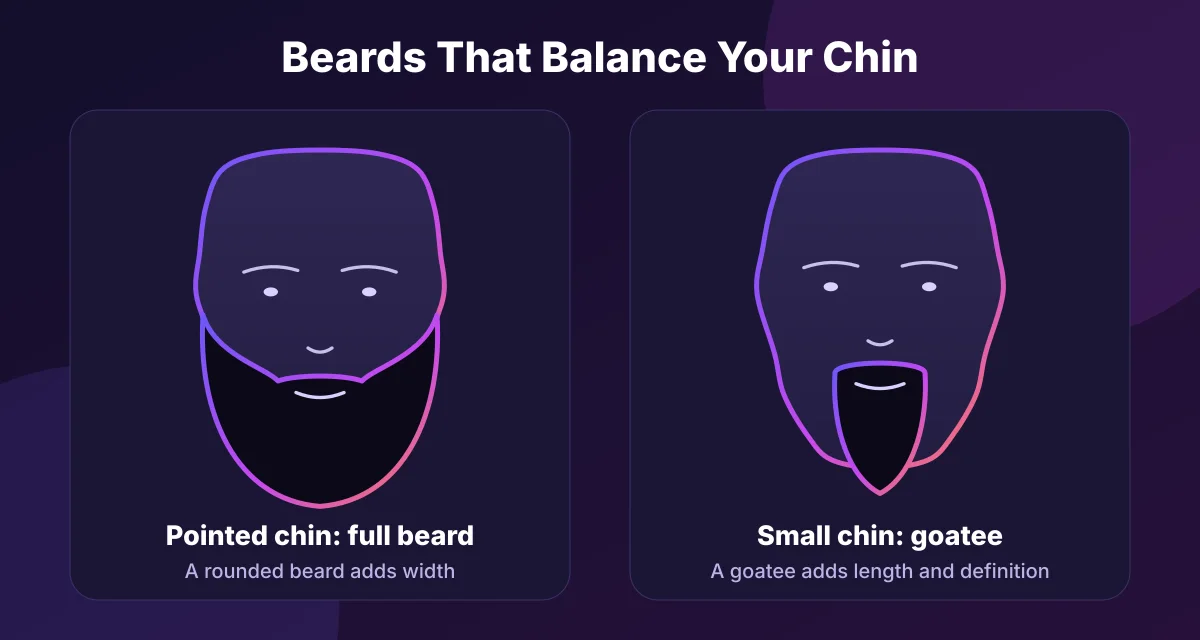
| Pointed | A full, rounded beard to add width at the chin | Chin-length bobs and waves that add width at the jaw | Frames wider at the bottom, such as aviators | Highlight the sides of the jaw, not the chin tip |
| Round | A goatee or a beard shaped longer at the chin | Height on top and angular cuts | Rectangular and angular frames | Light contour on the sides of the chin to lengthen it |
| Square | A rounded beard or short stubble that softens the corners | Soft layers and waves around the jaw | Round and oval frames | Soft contour on the chin corners |
| Cleft | Light stubble shows it off; a fuller beard hides it | Any style that suits your chin’s outline | Choose by your chin’s outline | No change needed; contour only to taste |
| Receding | A goatee or full beard that adds length and projection | Volume on top to balance the profile | Bold frames that draw the eye up | Highlight the center of the chin |
Chin Shapes FAQs
What is the most common chin shape?
There is no reliable data on how common each type is. Round and gently rounded chins are very common, while strongly pointed or square chins are less so.
What is a cleft chin?
A cleft chin has a dimple or vertical groove in the middle. It usually forms where the two halves of the jaw bone or chin muscle meet, and it tends to run in families.
What is a weak chin?
A weak or receding chin sits behind a line drawn straight down from the lower lip when you look at your face from the side. It is a normal variation; a beard, a goatee or a haircut with volume on top can balance it.
Does a beard hide a weak chin?
Yes. A goatee or a full beard trimmed slightly longer at the chin adds length and projection, which makes a receding chin look stronger.
Is a double chin a chin shape?
No. A double chin is soft tissue under the chin, not bone. It can hide the real outline of your chin, but it does not change it.
Can I tell my chin shape from a selfie?
Yes, if the photo is taken at eye level with a neutral expression. Add a side photo to judge how far your chin projects.
Which Chin Shape Do You Have?
Pointed, round, square or cleft: your chin shape comes down to its width, the shape of its lower edge and, in profile, how far it projects. Every chin can look great with a beard, haircut or pair of glasses that balances it. Your chin also finishes your face outline, so for the full picture, check your face shape with our free Face Shape Detector.